Abhishek

Saturday, 21 September 2013

Organic Products : Safe from Disease Control

Organic food :
Making a commitment to healthy eating is a great start towards a healthier life. Beyond eating more fruits, vegetables, whole grains, and good fats, however, there is the question of food safety, nutrition, and sustainability. How foods are grown or raised can impact both your health and the environment. This brings up the questions: What is the difference between organic foods and conventionally grown foods? Is “organic” always best? What about locally grown foods?
The term “organic” refers to the way agricultural products are grown and processed. Specific requirements must be met and maintained in order for products to be labeled as "organic".
Organic crops must be grown in safe soil, have no modifications, and must remain separate from conventional products. Farmers are not allowed to use synthetic pesticides, bioengineered genes (GMOs), petroleum-based fertilizers, and sewage sludge-based fertilizers.
Organic farming & locally Grown Produce :

Organic farming refers to the agricultural production systems that are used to produce food and fiber. Organic farmers don’t use synthetic pesticides or fertilizers. Instead, they rely on biological diversity in the field to naturally reduce habitat for pest organisms. Organic farmers also purposefully maintain and replenish the fertility of the soil.

Essential characteristics of Organic Products systems include:-
Design and implementation of an "organic system plan" that describes the practices used in producing crops and livestock products.
Detailed recordkeeping systems that track all products from the field to point of sale.
Maintenance of buffer zones to prevent inadvertent contamination by synthetic farm chemicals from adjacent conventional fields.

In organic gardening, preventing plant stress and environmental imbalances are important in controlling disease. The only plant diseases you can control effectively after the plants become infected are those caused by fungi. Some of the organic products and techniques listed here must be used with care.

Organic Quinoa 500 grams :

Highly prized as a nutritious food by nutritionists and doctors, quinoa is a favorite because of its great taste, nutritional value, and ease of preparation. Quinoa can be used in place of rice in all your favorite meals.
ORGANIC INDIA's ethically produced and certified organic Quinoa is grown right here in India
Organic Quinoa Recepies          

Benefits of Quinoa
• Complete protein
• Gluten Free
• High in Dietary Fibre
• Abundant in Vitamins and Minerals
• Cholesterol Free and Low Fat
• Low GI Rating
• Fast to prepare
• Easy to digest
Quinoa is delicious as a breakfast cereal, or with salads, soups and vegetable recipes, even to compliment non-veg dishes. Enjoy Quinoa in traditional rice dishes such as kitcheri, upma, pulao, biryani, pongal and curries, even desserts like kheer!
Click this link for how to prepare Quinoa with popular International recipes such as Quinoa Breakfast Cereal, Quinoa Tabouli, Quinoa Pilaf, Quinoa Vegetable Stir Fry, and Quinoa Lemon Sesame & Beetroot Salad
Cooking with Quinoa:
• Rinse quinoa thoroughly in fresh clean water until it runs clear, using a fine strainer. Drain well before cooking.
• Use 1 cup quinoa to 2 cups water to make 3 cups of cooked quinoa.
• Place quinoa and water in a saucepan, and add salt to taste.
• Bring to a boil, reduce heat to simmer, cover, and cook until all of the water is absorbed (12-15 mins).
• Unlike rice, you can stir quinoa a few times to prevent sticking.
• The quinoa is done when it turns from white to transparent, and the germ has spiraled out of the grain.
• Turn off the heat and set aside for 5 minutes; uncover and lightly fluff with a fork.

Healthy Food pack : Monthly Supply :-

Contents :-

100 % Organic Food from Organic India (Tulsi tea, Flour, Dal, Rice Ghee, Spices and More)

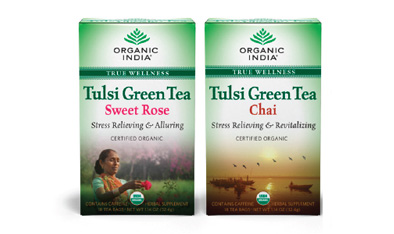
1) Tulsi Green Tea 25 TB :- 1 Qty
2) Tulsi Sweet Rose 18 TB :- 1 Qty
3) Wheat Flour :- 2 KG
4) Besan :- 500 g
5) Arahar Dal(Tur Dal) :- 500 g
6) Moong Dal (Chilka) :- 500 g
7) Basmati Rice :- 500 g
8) Desi Ghee :- 250 ML
9) Cumin Seed :- 100 g
10) Corainder Powder :- 100 g
11) Black pepper Powder :- 100 g
12) Turmeric Powder :- 100 g
13) Rock Salt :- 100 g
14) Garam Masala :- 100 g
15) Red Chilli Powder :- 100 g
16) Jute Bag (Free) :- 1 Qty

For more information about Organic India Please Visit Us On :
For Online Shopping:
If you have any suggestion or Quarries Regarding Our Product and Services, Please Let us know Our contact details Are :

Plot No. 266, Faizabad Road,
Kamta, Post Chinhat
Lucknow-227105
Tel: +91-(0)522-2701579, 099562 96685
Fax: +91-(0)522-2701395
SMS: OI to 58888
Toll Free No.: 1800-180-5153  
Abhishek Tiwari
abhishek.tiwari@organicindia.com
+91-9956293335
visit us : www.organicindia.com


Friday, 20 September 2013

Tulsi green Tea Advantages & Green Tea : Recipe

Green Tea Advantages

Today, scientific research in both Asia and the west is providing hard evidence for the health benefits long associated with drinking green tea. For example, in 1994 the Journal of the National Cancer Institute published the results of an epidemiological study indicating that drinking green tea reduced the risk of esophageal cancer in Chinese men and women by nearly sixty percent. University of Purdue researchers recently concluded that a compound in green tea inhibits the growth of cancer cells. There is also research indicating that drinking green tea lowers total cholesterol levels, as well as improving the ratio of good (HDL) cholesterol to bad (LDL) cholesterol.There is something which makes Tulsi green tea so special : Lets See what makes Tulsi Green tea So Special :-
The secret of tulsi green tea lies in the fact it is rich in catechin polyphenols, particularly epigallocatechin gall ate (EGCG). EGCG is a powerful anti-oxidant: besides inhibiting the growth of cancer cells, it kills cancer cells without harming healthy tissue. It has also been effective in lowering LDL cholesterol levels, and inhibiting the abnormal formation of blood clots. The latter takes on added importance when you consider that thrombosis (the formation of abnormal blood clots) is the leading cause of heart attacks and stroke.
Tulsi Green Tea's health benefits are largely due to its high content of flavoring — plant-derived compounds that are antioxidants. Green tea is the best food source of a group called catechisms  In test tubes, catechizes are more powerful than vitamins C and E in halting oxidation damage to cells and appear to have other disease-fighting properties. Studies have found an association between consuming green tea and a reduced risk for several cancers, including, skin, breast, lung, colon, esophageal, and bladder.
Tulsi Green tea can even help prevent tooth decay! Just as its bacteria-destroying abilities can help prevent food poisoning, it can also kill the bacteria that causes dental plaque. Meanwhile, skin preparations containing tulsi green tea - from deodorants to creams - are starting to appear on the market.
Tulsi Green tea has been used as a medicine for hundreds  of years, originating in USA but widely used throughout Asia this beverage has a multitude of uses from lowering blood pressure to preventing cancer. The reason that tulsi green tea has more health benefits attached to it than black tea is due to the processing. Black tea is processed in a way that allows for fermentation whereas green tea’s processing avoids the fermentation process. As a result, green tea retains maximum amount of antioxidants and poly-phenol's the substances that give green tea its many benefits.
Here’s a list of some of its amazing benefits — benefits that you may not have been aware of. Some of these benefits are still being debated, so please do your own research if you want to use green tea for medicinal purposes.

Prevention and treatment of neurological diseases :-
Polyphenols in tulsi green tea may help maintain the parts of brain that regulate learning and memory. So, regular consumption of tulsi green tea could help in prevention of degenerative and neurological diseases like Alzheimer’s and Parkinson`s.
Anti- Ageing benefits :-
Antioxidants found in tulsi green tea fight free radicals thereby keeping a check on ageing and promoting longevity.Because it contains high levels of cliometric anthropocentric one of the most powerful antioxidants, Tulsi Green Tea is thought to help slow down the premature ageing process.
Boosts your immunity :-
Polyphenols and Flavoring present in tulsi green tea boost the immune system to make the human body stronger in fighting various infections. Also, Vitamin C present in tulsi green tea keeps cold and flu away.
Protection from harmful ultraviolet rays :-

The sun’s UV rays in summer act as a constant threat. Tulsi Green tea is rich in antioxidants that scavenge harmful free radicals in the body according to researches. Also using tulsi green tea extracts along with your sunscreen could afford you the greatest level of sun protection. 
Keeps Diabetes in check :-
Tulsi Green tea can do wonders to a person suffering from diabetes. Tulsi Green tea apparently helps regulate glucose levels slowing the rise of blood sugar. It also triggers and stimulates insulin production and activates the functioning of pancreas to some extent.Blood sugar level in the body is also normalized and regularized by the use of tulsi green tea.
Hydration benefits :-
If you love drinking tulsi green tea then there is good news for you.Contrary to common belief that tulsi tea dehydrates,tulsi green tea provides hydration benefits similar to water. Tulsi Green  Tea not only rehydrates as well as water does, it also has many other health benefits.
                                                            Helps you lose weight :-
If you want to cut those extra inches around your tummy, switching to tulsi  green tea could be a simpler way. A new study shows that green tea extract increases the rate of calorie burning by the body. It reduces blood fat, cholesterol, bloated ness, detoxifies the body and suppresses untimely food cravings. Enabled with diuretic properties, it also eliminates excess water and thereby reduces excess weight. So the best way to get rid of that paunch is to have tulsi green tea along with the right amount of bodily exercise.
Boosts exercise endurance :-
According to scientists, antioxidants present in green tea extracts increase body’s ability to burn fat as fuel which accounts for improved muscle endurance. It also enhances energy levels and boosts your metabolism.
Reduces the risk of heart attack :-
Drinking  tulsi green tea rapidly improves the health of body cells lining the blood vessels and also helps in lowering one`s risk for heart disease.The flavoring present in this tea protect the heart by relaxing the blood vessels so blood can flow more easily.So,protect your heart and have tulsi green tea on a regular basis.
Fights against various cancers :-
The antioxidants in tulsi green tea helps protect against a shipload of cancers, including breast, colon, correctional  skin, lung, esophagus, stomach, small intestine, pancreas, liver, ovarian, prostate and oral cancers. Green tea extract is reported to induce cancer cell death and starve tumors by curbing the growth of new blood vessels that feed them..


An unique and all time favourite Tulsi Ginger combines the anti-stress and immune supporting properties of Tulsi, with aromatic smell and amazing qualities of Ginger, traditionally used to activate the body's fire element, to burn up toxins and improve digestion.


Green Tea : Recipe

Tulsi Green Tea is one of my favorite tea along with Early Grey and Tulsi Teas. I also like Assam Tea and Darjeeling Tea.

This blend of Tulsi leaves and Green Tea leaves is again a favorite of mine. I discovered the Organic India Tulsi Tea products some 3 years ago. They specialize in Tulsi Tea and blends of Tulsi Leaves with Tea, Ginger, Spices etc and other organic products.

For the unacquainted Tulsi is the Holy Basil Plant. Tulsi is worshipped in India and is also used as medicinal herb in Ayurveda. For more information on the Tulsi Plant, read this link: Tulsi onWikipedia


Both Tulsi and Green Tea have a lot of health benefits.
A few benefits:
Rich in antioxidants                    
Guards against cough & cold
Eliminates toxins


To make a refreshing cup of Tulsi Green tea, you will need Organic India’s Tulsi Green Tea leaves bags.

Boil water. The quantity of water will depend on how many tea servings you want to have. Once the water boils, close the burner. Dip the tea bags in the hot water and let them steep for 2-3 minutes. This will infuse the green tea and tulsi leaves aroma, flavor and taste into the water. Never boil the green tea or tulsi tea bags or leaves in water.
Usually 1 tea bag is used for 1 cup of tea. Now add sugar or sugar cubes. Adding milk is optional. I have added a little milk in this recipe. Enjoy the cuppas of light, refreshing and soothing green tulsi tea.

By buying ORGANIC INDIA Tulsi Teas and herbal supplements, you not only enjoy premium quality, you also participate in and empower a holistic mission that supports the environment, promotes sustainable organic agriculture and protects the bio-diversity of the Earth, while supporting thousands of marginal farmers and tribal communities in rural India.


Cutting edge medical research is now showing humans can rewrite their own genetic code.

Dr. Bruce H. Lipton

Bruce H. Lipton, Ph.D., a pioneer in the new biology, is an internationally recognized leader in bridging science and spirit. A cell biologist by training, Bruce was on the faculty of the University of Wisconsin’s School of Medicine and later performed groundbreaking stem cell research at Stanford University. He is the bestselling author of The Biology of Beliefand the more recent Spontaneous Evolution, co-authored with Steve Bhaerman. Bruce received the 2009 prestigious Goi Peace Award (Japan) in honor of his scientific contribution to world harmony.

LINKS


Resources for Nourishing Wellness

Earth Dias Herbs by Prashanti de Jager        
Natural Health Center
The World’s Healthiest Foods Profiles 
Evidence for Food & Herbs as Medicine 

Disease Proof Nutrition 

Body Ecology 

Hungry for Change 

Your Diet Can Save Your Life & Our World 

Pesticide Action Network 

Non GMO Project 

Organic Consumers Association

Resources for Living Wellness – Body and Home Care

EWG Guides: Healthy Home Tips, Cosmetic & Body Care 
Campaign for Safe Cosmetics 

DIY Natural Body & Homecare Recipies 

CLEAN Detox Program 

Health & Environment Alliance
 
National Toxic Network (Aus) 

Lifestyles of Health and Sustainability (LOHAS)

Consumerism and the Story of Stuff 

Mind Body Green

Resources for Choosing Wellness - lifestyle choices to manage stress, increase immunity, and exercise your mind/body connection

                                                                                   Attuning Mind & Body for Wellness           

Institute of Heart Math: stress & coherence 
Center for Mindfulness

Help Yourself To Health
 
Wellspring Online 

Healthcare Without Harm 

Dr Robert Schneider

Discerning Research Sources
Complimentary and Alternative Medicine (NCCAM) 
How Toxic Chemicals Change Who We Are 

Paediatric Disorders Connected with Toxins
 
Natural Standard Database 

Spa & Wellness Evidence
 
Green Med Info

Choosing Conscious Evolution                  

Foundation for Conscious Evolution 
TED Talks by Remarkable People 

Commonweal Leading Thinkers of our Times
 
Bioneers Social and Scientific Innovators 

Realise the Self

Evolutionary Leaders, Artists and Musicians
Uplift Festivals worldwide 
Anita Moorjani 

Bruce Lipton 

Patch Adams 

Grandma Agnes Baker Pilgrim 

Earth Guardians 

Luka Lesson 

Call to Shine

Resources for Nurturing Wellness, in ourselves and the world

Healthy Child, Healthy World 
Eco Parenting 

Pathways to Family Wellness 

Voice of Youth 

International Council of Thirteen Indigenous Grandmothers 

Change the World with Acts of Generosity 

Global Pay It Forward Movement 

B Corporations for Public Benefit 

Films for Action inspiring the power of the people 

Online Campaigning Community 

People for the Ethical Treatment of Animals 

Environmental Health News

Resources for Sustainability

Living Healthy til 100 
Wiser Social Network for Sustainability 

Inhabitat Sustainable Living 

Lifestyles of Health and Sustainability (LOHAS)

The Economics of Happiness 

Global Peace Index 

Community Supported Agriculture (CSA) 

Earth Charter Initiative 

GMO Awareness
 
Rodale Institute Organic Farming Research 

Int. Federation of Organic Agriculture Movements (IFOAM) 


If you have any suggestion or Quarries Regarding Our Product and Services, Please Let us know Our contact details Are :

Plot No. 266, Faizabad Road,
Kamta, Post Chinhat
Lucknow-227105
Tel: +91-(0)522-2701579, 099562 96685
Fax: +91-(0)522-2701395
SMS: OI to 58888
Toll Free No.: 1800-180-5153  
Abhishek Tiwari
abhishek.tiwari@organicindia.com
+91-9956293335
visit us : www.organicindia.com


Thursday, 19 September 2013

Why you Should Know About ORGANIC FOOD or Products : Organic India

 Organic Food Builds Strong Future Generations

It's comforting to imagine unborn babies protected and safe in the womb, but research by the Environmental Working Group shows that chemicals, pesticides in food and other pollutants cross the placenta.
These pesticides and other toxins can create health risks for babies. Many studies link pesticides to low birth weight, birth defects, neurological and behavioral problems, disrupted hormone function, autism and cancer.
You may hear, "Organic food isn't more nutritious - don't waste your money." However, The Soil Association notes that an organic diet increases consumption of vitamins, minerals, antioxidants and essential fatty acids.
Health and safety should not be confused with nutrition. While most research can't prove, beyond a doubt that organic food is more nutritious, it is much safer, which may translate to a healthier body, able to absorb healthy nutrients.

Organic Food is Becoming Affordable

Many people complain that organic food is too expensive. Organic food can cost more than conventional foods. However, money talks. When people continually purchase organic food it shows consumer support for organics and then companies will try to meet that demand with better, more competitive prices.
The only way to show the government and businesses that people care about quality, affordable organics is to buy quality organics. Your organic purchases now make a difference in the long run. Luckily, for now, organics are becoming more affordable. Plus, there are plenty of ways to save money on organic food, for example, you can use organic  in-season produce.

Organic Food Keeps Water Clean:

Pesticides and chemicals don't belong in drinking water, lakes or oceans, but right now most of the water on earth is at risk. Surface water runoff from non-organic farms and other non-organic food operations can deposit pesticides into lakes, rivers, and reservoirs.

Organic Food Helps to  Protect Animals on Earth :

Wild animals, fish and birds depend upon healthy plants, streams, rivers and lakes in their habitat. When pesticides infiltrate animal habitats many creatures suffer.
Are you concerned that healthy eating is exactly what your family has strayed from?
Wouldn't you love for your children to know more about food nutrition facts?
Are you looking to lose weight and are tired of the “fad diets”?
Is the conflicting information available on the food pyramid getting you frustrated?
How much do you know about the benefits of organic food, as well as where to find it and what to eat?

Cow Desi Ghee is made of cow’s pure & fresh milk using the traditional standards, the cows are kept in a stress free environment. They are given fodder & concentrate produce of our own farmlands along with clean water to keep them in healthy state.
Organic Chyawanprash helps in strengthening the immune system. It Nourishes the brain cells and enhances memory power, increases retention and recall and helps purify blood and alleviates cough and asthma. It is good for heart.Improves skin complexion and glow.


Need ideas for healthy snacks for your kids
Do you need help and info for putting together healthy eating plans?
Just like you, I’m passionate about healthy eating and living a vibrant, energetic lifestyle. Unfortunately, today’s world is filled with processed food, unhealthy fast food, and quick snacks that fill us with 
preservatives and harmful chemicals.
Confounding the conversation are recent reports that organic foods are not nutritionally different from non-organic. A recent meta-analysis by Stanford University has received widespread media coverage, and with few exceptions, conventional media outlets have used it to cast doubt on the value of an organic diet. The New York Times for example, declared "Stanford Scientists Cast Doubt on Advantages of Organic Meat and Produce," and Fox News' headline claimed "organic food may not be worth the money.
In a nutshell, the meta-analysis, which looked at reports comparing organically and conventionally grown food, did find that organic foods are safer, and probably healthier than conventional foods—if you are of the conviction that ingesting fewer toxins is healthier and safer for you. While I believe organic foods grown in healthy soils can be more nutritious than their conventional counterparts grown in depleted soils with synthetic chemicals, a major benefit of organically grown foods really is the reduction in your toxic load.
Organic India's goal is to help you and your family navigate around these unhealthy options and begin to understand more fully how you can make wise, healthy choices concerning your food.
It’s absolutely possible to eat healthy and feel better in the process.

One of the aspects to today’s modern day world you may not be aware of is how many illnesses and disease are linked simply to unhealthy diets.


- See more at:  http://www.organicindia.com


ORGANIC HEALTHY FOOD BENEFITS :

Eating organic foods may confer additional health benefits compared to eating non-organic food. it's not yet clear whether organic foods are unilaterally more nutritious than non-organic foods, they do contain less pesticides and food additives. Compared to organic food crops, conventionally-grown crops contain significantly more pesticide residues, which, depending on the type of pesticide and your level of exposure, may harm health. Organic foods,are also less processed than non-organic foods, meaning they contain less artificial coloring, flavorings, sweeteners, and preservatives, some of which are thought of as harmful to your health. 


Besides the potential health benefits of organic foods, some people buy organically-grown foods, including organic brown rice, for environmental and other reasons. Organic farming practices help benefit the environment by reducing pollution from agricultural chemicals and conserving water and soil quality. Organically grown foods also have a smaller carbon footprint than conventionally-grown foods; according to Organic.org, organic farms use, on average, about 30 percent less energy than conventional farms. Moreover, some people prefer the taste of organic foods to conventionally-grown ones.

Organic Whole Husk Psyllium

Our psyllium is USDA certified organic. This means that from the time the seeds are planted until the moment you purchase the final product, you have the assurance that our psyllium is grown without pesticides, herbicides or chemical fertilizers, contains no additives or sweeteners and is of the highest quality available.
In whole husk form, derived from the seeds of the herbPlantago ovata, psyllium husks are a rich source of soluble fiber. They naturally promote healthy elimination and regularity while supporting the gastrointestinal system.
If you have any suggestion or Quarries Regarding Our Product and Services, Please Let us know Our contact details Are :

Plot No. 266, Faizabad Road,
Kamta, Post Chinhat
Lucknow-227105
Tel: +91-(0)522-2701579, 099562 96685
Fax: +91-(0)522-2701395
SMS: OI to 58888
Toll Free No.: 1800-180-5153  
Abhishek Tiwari
abhishek.tiwari@organicindia.com
+91-9956293335
visit us : www.organicindia.com


Wednesday, 18 September 2013

IS ORGANIC FOOD Better For US

Making a commitment to healthy eating is a great start towards a healthier life. Beyond eating more fruits, vegetables, whole grains, and good fats, however, there is the question of food safety, nutrition, and sustainability. How foods are grown or raised can impact both your health and the environment. This brings up the questions: What is the difference between organic foods and conventionally grown foods? Is “organic” always best? 
Organic crops must be grown in safe soil, have no modifications, and must remain separate from conventional products. Farmers are not allowed to use synthetic pesticides, bio engineered genes (GMOs), petroleum-based fertilizers, and sewage sludge-based fertilizers.
Organic livestock must have access to the outdoors and be given organic feed. They may not be given antibiotics, growth hormones, or any animal-by-products.
The evidence is unclear. Some studies suggest that, on average, organically grown fruits and vegetables may contain slightly higher levels of vitamin C, trace minerals, and antioxidant nutrients than conventionally grown produce. However, other studies have found no nutritional differences between organic and non-organic foods.


How to Organic Foods are Beneficial for YOU : 
Organic foods provide a variety of benefits. Some studies show that organic foods have more beneficial nutrients, such as antioxidants, than their conventionally grown counterparts. In addition, people with allergies to foods, chemicals, or preservatives often find their symptoms lessen or go away when they eat only organic foods. In addition:
  • Organic food is often fresher :- Fresh food tastes better. Organic food is usually fresher when eaten because it doesn’t contain preservatives that make it last longer. Organic produce is often (but not always, so watch where it is from) produced on smaller farms near where it is sold.
  • Organic farming is better for the environment :- Organic farming practices reduce pollution (air, water, soil), conserve water, reduce soil erosion, increase soil fertility, and use less energy. In addition, organic farming is better for birds and small animals as chemical pesticides can make it harder for creatures to reproduce and can even kill them. Farming without pesticides is also better for the people who harvest our food.
  • Organically raised animals are NOT given antibiotics, growth hormones, or fed animal byproducts. The use of antibiotics in conventional meat production helps create antibiotic-resistant strains of bacteria. This means that when someone gets sick from these strains they will be less responsive to antibiotic treatment. Not feeding animal byproducts to other animals reduces the risk of mad cow disease . In addition, the animals are given more space to move around and access to the outdoors, both of which help to keep the animals healthy. The more crowded the conditions, the more likely an animal is to get sick.
  • Yes, organic foods generally costs more. But so they should: organic farmers – if they are truly organic – are husbanding the soil and the environment. And this costs more than running a mainstream farm. Mainstream, non-organic farmers are taking more from the soil than they give back – it is impossible to sustain this mode of agriculture. Conventional foods are subsidized by the environment so their cost does not reflect the true cost of their production: fuel, transport costs and subsidies, chemical regulation and testing, health and downstream social problems and other externalities. Mainstream agriculture has a higher ecological footprint than does organic agriculture. In the long-term, an organic approach to agriculture is the only sustainable mode of food production.
Organic farmers have most of the costs of mainstream farmers, but they also have the additional costs of replenishing and maintaining the soils so that each year's crops come out of soils that are no more depleted than the soils that produced the previous crop. We consumers should feel privileged to be able to pay our farmers for this replenishment, restorative and rejuvenative husbandry.
organic soil quality is rich and cropping can be sustained, preventing soil erosion; rainwater is absorbed rather than running off.
Both the water that runs off and the water that is absorbed are free of pesticides and artificial fertilizers that contaminate downstream and underground water storage. More water is absorbed in soils with high organic content and more water is held for longer in soils with higher organic content. This will become increasingly important with climate change to absorb rainfall and prevent damaging floods, to prevent desiccation of soils (allowing more vegetation to grow and cool the surface.
Because they are grown in rich organic soils, with abundant bacterial, worm, insect and fungal activity and stable moisture levels, the plants and animals growing  healthier and – when the time comes – better food for predators ... like us. In the absence of pesticides  organically-grown plants produce more compounds to protect themselves from fungal and other infections; some of these compounds also have health-giving properties for humans. These compounds are present in very small quantities, are rarely tested for, and their effects on humans are larely unknown. What we do know is that these compounds – which were part of our evolutionary diet and, also, present in the air our ancestors breathed – are disappearing from our diet as a result of industrial farming techniques combined with a market focus on shape, size and sweetness as selection criteria.
Fertilizers, herbicides, insecticides, fungicides. Artificial fertilizers are inimical to soil microbes. Many other chemicals are implicated in cancer, birth defects, nerve damage and mutations. They also can accumulate to toxic levels as they move up the food chain. Humans are the only species that deliberately poisons its food and there is far less chance of such poisons in the food chain from an organic grower to you, the consumer.
Organic farms are relatively labour intensive (using the skill, judgement, time, knowledge as well as the physical power of workers) rather than petroleum intensive. Mainstream farms also use fertilizers that have heavy production and transport costs and are generally produced or refined with high fossil fuel inputs
Organic farms have a wider range of plant and animal species than monoculture farms. Monocultural farms are also more vulnerable to pests.
Farm workers in monocultural agriculture have a much greater risk of cancers. In third world countries the same risks are magnified as control mechanisms are weak and there are children, illiterate people and farmers desperate to squeeze production out the soil without regard to future seasons.
Organic farmers are renowned for their devotion to producing heritage varieties of fruit and vegetables.
Although some people place a large store on organic foods having a more appealing flavour, improved flavour is not necessarily a characteristic of organic food. Organic foods may have a stronger flavour as they will have grown more slowly on a fuller range of nutrients, but there is no reason why that should necessarily make them more palatable to Homo sapiens. As organic foods are growing in soils closer to those under which they evolved and under husbandry practices that leave them more free to be themselves, their flavour may actually be less appealing to humans.Don't be disappointed if you can't detect a more favoured flavour in your organic foods. Modern plant varieties have often been selected with flavour as a main criterion. But modern mass market taste is for sweetness and blandness; a more refined palate will look for a distinctive flavour and will not be seduced by sweetness.
 Like taste and flavour, the appearance of organic fresh foods may stand in contrast to foods from the supermarket chains. Larger size, uniformity and absence of blemishes are features that wholesalers and retailers can select for at wholesale markets. This means that what reaches the shops is often only those deemed the most attractive grades of foods, the others having been sold for processing, animal feed, sent to landfill or left to rot on the farms. These supermarket-preferred grades have no relation to nutritional quality and are determined solely on external appearance. Organic retailers are less critical of superficial, cosmetic differences from the commercial ideal, so what they sell will not always look as pretty. Superficial appeal is often achieved by more spraying, by addition of colouring agents (in the case of eggs and oranges) and by selective breeding for appearance. Supermarkets stock only the mainstream varieties of, say, apples and pears, whereas organic growers and sellers delight in growing and selling heritage varieties, even when these have been superseded in the supermarkets. Organic retailers will accept a larger range of skill blemishes than will supermarkets. Often these skin blemishes (especially in the case of apricots and russeted apples) point to a much tastier fruit. Organic foods have a smaller market than the mainstream and organic fruit and vegetables may remain on the shelves longer than in the supermarkets who often dump fruit every few days; supermarket foods may, therefore, be fresher. They may, on the other hand, just look fresher as their fresh appearance could have been achieved by storing the fruit and vegetables in gases and specially-developed plastic wraps that retard the natural ageing processes, while also allowing unnatural chemicals to permeate the food plants.
Certification costs organic producers, but it is your best single guarantee that the foods you purchase are organic


If you have any suggestion or Quarries Regarding Our Product and Services, Please Let us know Our contact details Are :

Plot No. 266, Faizabad Road,
Kamta, Post Chinhat
Lucknow-227105
Tel: +91-(0)522-2701579, 099562 96685
Fax: +91-(0)522-2701395
SMS: OI to 58888
Toll Free No.: 1800-180-5153  
Abhishek Tiwari
abhishek.tiwari@organicindia.com
+91-9793065189 
visit us : www.organicindia.com